


Westbrook Lane Primary School
nurtures confident children with caring hearts and curious minds
Maths Curriculum
Please see the following information regarding our maths curriculum.
Intention
A well planned and effectively implemented curriculum begins with a sound and secure knowledge of the National Curriculum purpose and aims for the subject.
National Curriculum Purpose for maths
The national curriculum states that maths is a creative and highly inter-connected discipline that has been developed over centuries, providing the solution to some of history’s most intriguing problems. It is essential to everyday life, critical to science, technology and engineering, and necessary for financial literacy and most forms of employment A high-quality mathematics education provides therefore provides a foundation for understanding the world, the ability to reason mathematically, an appreciation of the beauty and power of
mathematics, and a sense of enjoyment and curiosity about the subject.
National Curriculum Aims
Ensure that all children can:
The national curriculum for mathematics aims to ensure that all pupils:
• become fluent in the fundamentals of mathematics, including through varied and frequent practice with increasingly complex problems over time, so that pupils develop conceptual understanding and the ability to recall and apply knowledge rapidly and accurately.
• reason mathematically by following a line of enquiry, conjecturing relationships and generalisations, and developing an argument, justification or proof using mathematical language
• can solve problems by applying their mathematics to a variety of routine and nonroutine problems with increasing sophistication, including breaking down problems into a series of simpler steps and persevering in seeking solutions.
At Westbrook, we believe every child is a mathematician. We are committed to fostering high expectations for all learners, including those with SEND and EAL, by providing a rich and inclusive mathematical education. Through carefully sequenced teaching, we develop pupils’ fluency, reasoning, and problem-solving skills, enabling them to make meaningful connections and apply their understanding in real-life contexts. Our curriculum promotes independence, resilience, and a lifelong positive attitude towards mathematics, equipping children with the knowledge, skills, and confidence to thrive both in school and beyond.
Mathematics supports our school vision of caring hearts by encouraging collaboration, empathy and a positive learning environment. It nurtures curious minds through exploration, pattern-spotting, and open-ended problem solving. By building fluency, resilience, and independence, it empowers pupils to become confident individuals who approach challenges with self-belief and enthusiasm.
A feature of our curriculum design is the use of the Master the Curriculum scheme in Reception and KS1, where we also follow the Mastering Number programme to strengthen pupils’ understanding of number sense, and supporting resources from White Rose Maths in KS2.
The curriculum for maths has:
Disciplinary Knowledge
Disciplinary knowledge asks the questions that are at the heart of the subject. Disciplinary knowledge in primary maths refers to how pupils learn to think, reason, and behave like mathematicians. It focuses on the processes and practices of doing mathematics, not just the content. Pupils ask questions such as:
• How do we know this method works/won’t work?
• What is the most efficient way of solving this problem?
• How can we break this problem into smaller parts?
• How can you prove your answer is correct?
• What mistake did I make and how can I fix it?
Theoretical Knowledge (Substantive)
Theoretical knowledge includes the core mathematical facts, concepts, and procedures that pupils need to understand and apply. It forms the foundation for pupils to develop fluency, make connections across topics, and apply their understanding to solve problems and reason mathematically.
This includes:
• Composition of Number
• Place value
• Operations and calculations
• Fractions, decimals and percentages
• Measurement
• Geometry
• Statistics
• Language and symbols used in maths
• Algebra (UKS2)
These have each been sequenced so that pupils are explicitly taught aspects in small steps, allowing them to gradually build their understanding and mastery of mathematical vocabulary, fluency, and conceptual understanding.
Implementation
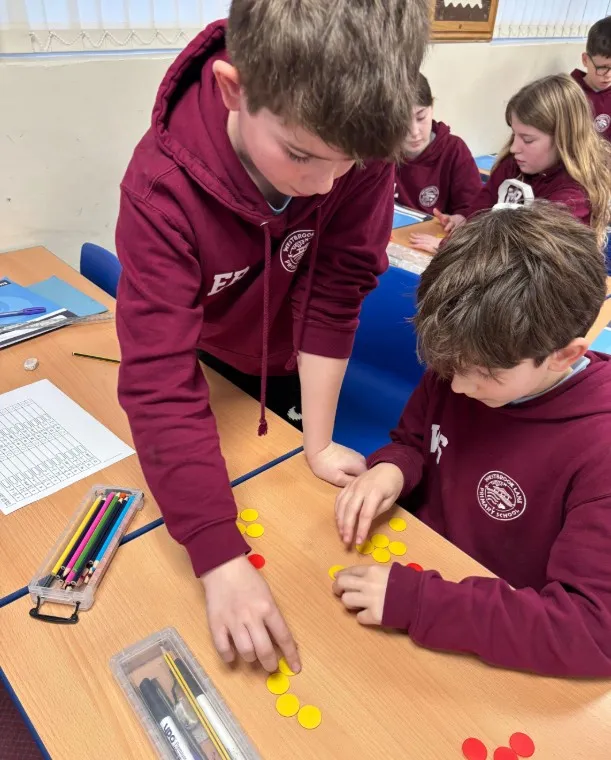
Quality first curriculum implementation in maths supports children in becoming secure, and fluent in the identified knowledge and skills in maths. Maths at Westbrook Lane adopts a concrete, pictorial and abstract (CPA) approach, ensuring that pupils build a deep and secure understanding of mathematical concepts.
Children begin by exploring ideas using concrete resources such as counters, cubes and number lines. They then move to pictorial representations, including diagrams and drawings, to visualise and make sense of mathematical relationships before finally progressing to abstract methods, using numbers and symbols confidently and fluently. This structured progression supports learners across all year groups and helps to develop reasoning, problem-solving and mathematical fluency across the curriculum.
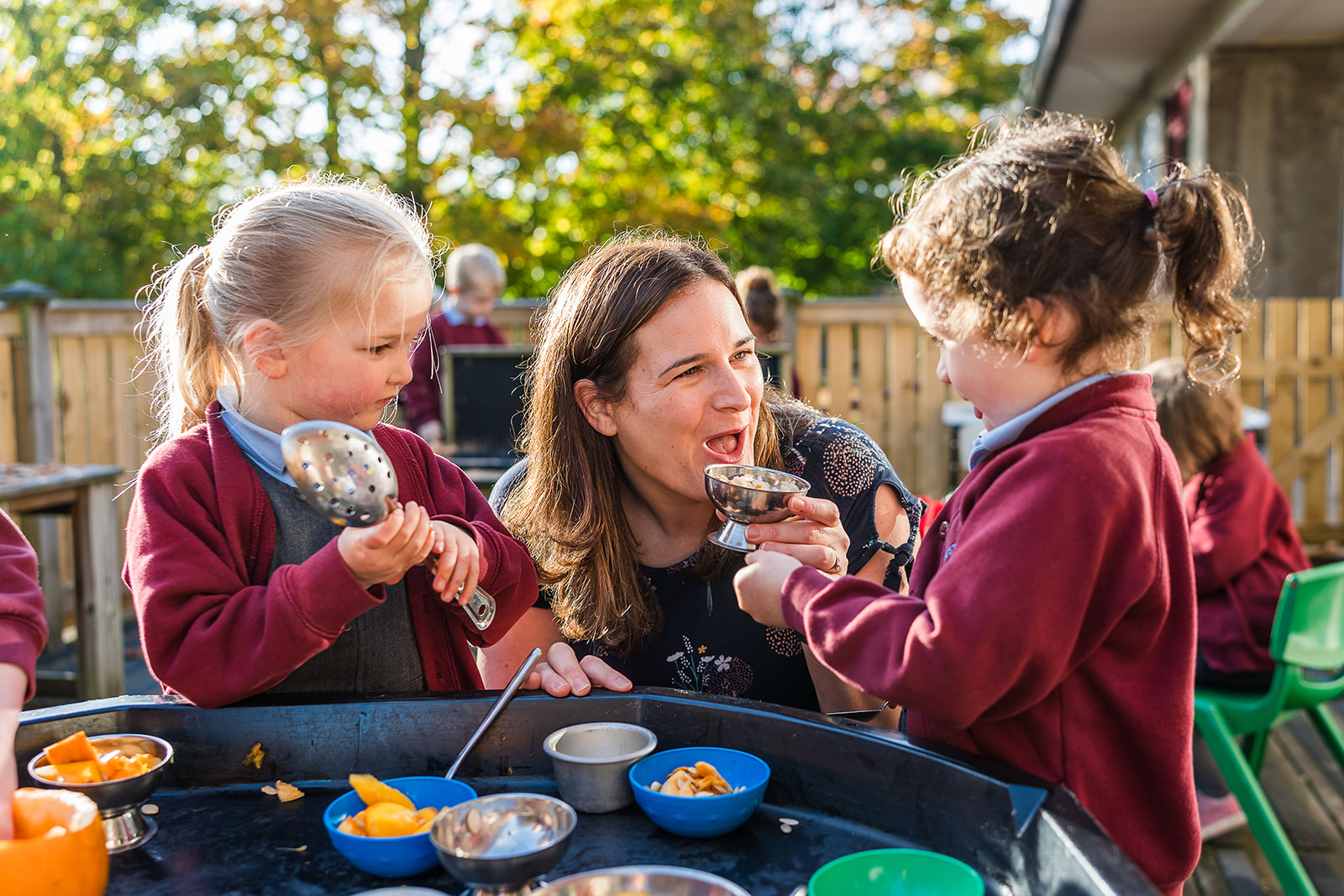
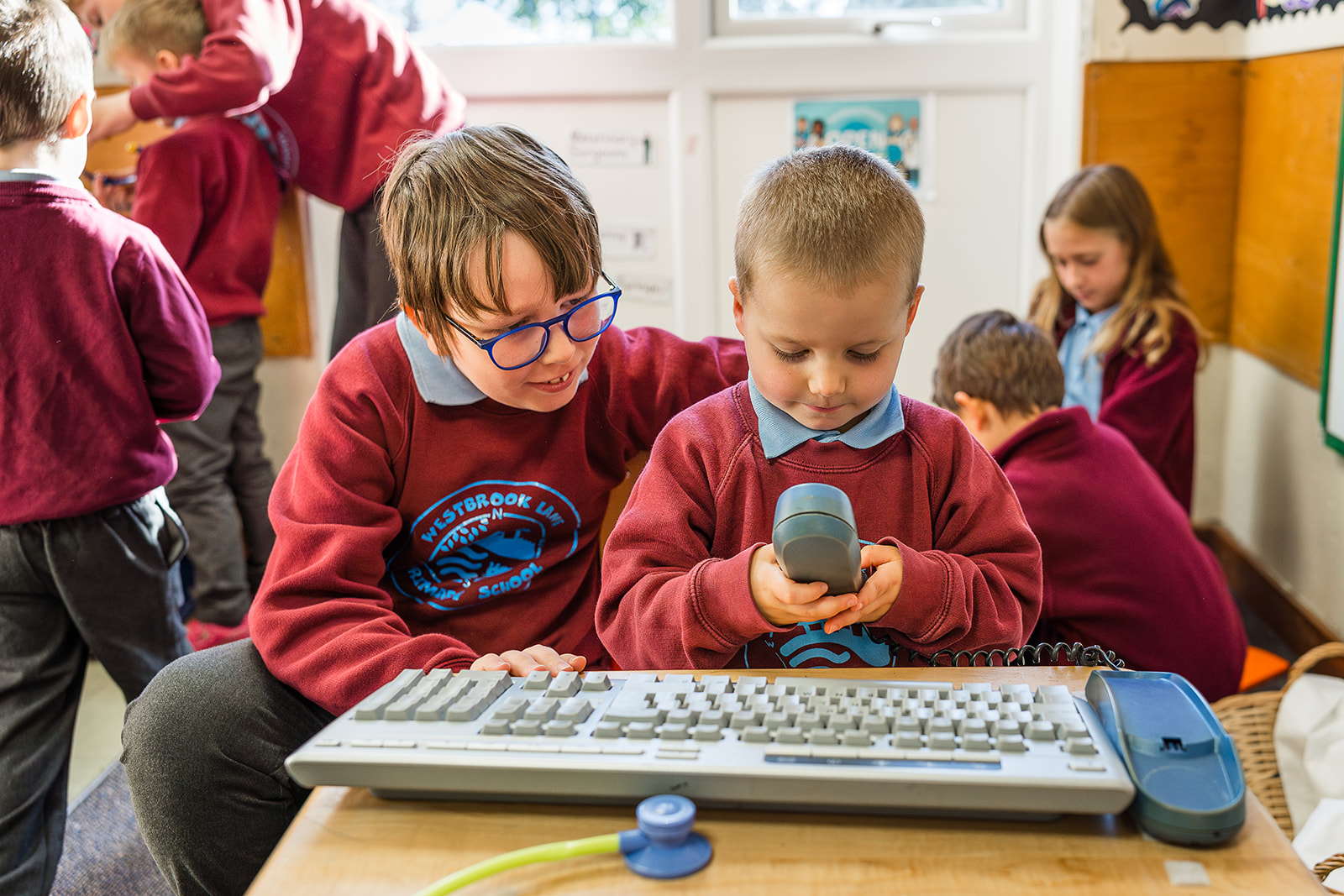
At Westbrook, the journey to becoming passionate towards maths begins in the Early Years. Our youngest children learn about subject within the EYFS area of learning known as numbers and numerical patterns. These will be led by the children’s interest and the ‘here and how’ gained from the observation, assessment and planning cycle. An example of how we inspire a love for maths in EYFS includes throughout the topic ‘People Who Help Us’. During this topic, the children in EYFS learn about events such as visiting the local fire station,
meeting a nurse, and exploring how different professionals use maths in their everyday roles — for example, counting equipment, measuring medicine, or using time to organise their day.
Maths lessons follow a consistent structure in all year groups:
• In Reception, teachers use the Mastering Number materials for their main maths lessons for all number work, and ensure that children are offered additional experiences to embed their learning in the wider provision
• In Key Stage 1, teachers deliver 4 x 10–15 minute Mastering Number sessions per week in addition to their main maths lesson. This is in addition to a main maths lesson which focusses on the new learning, delivered in a sequence of small steps.
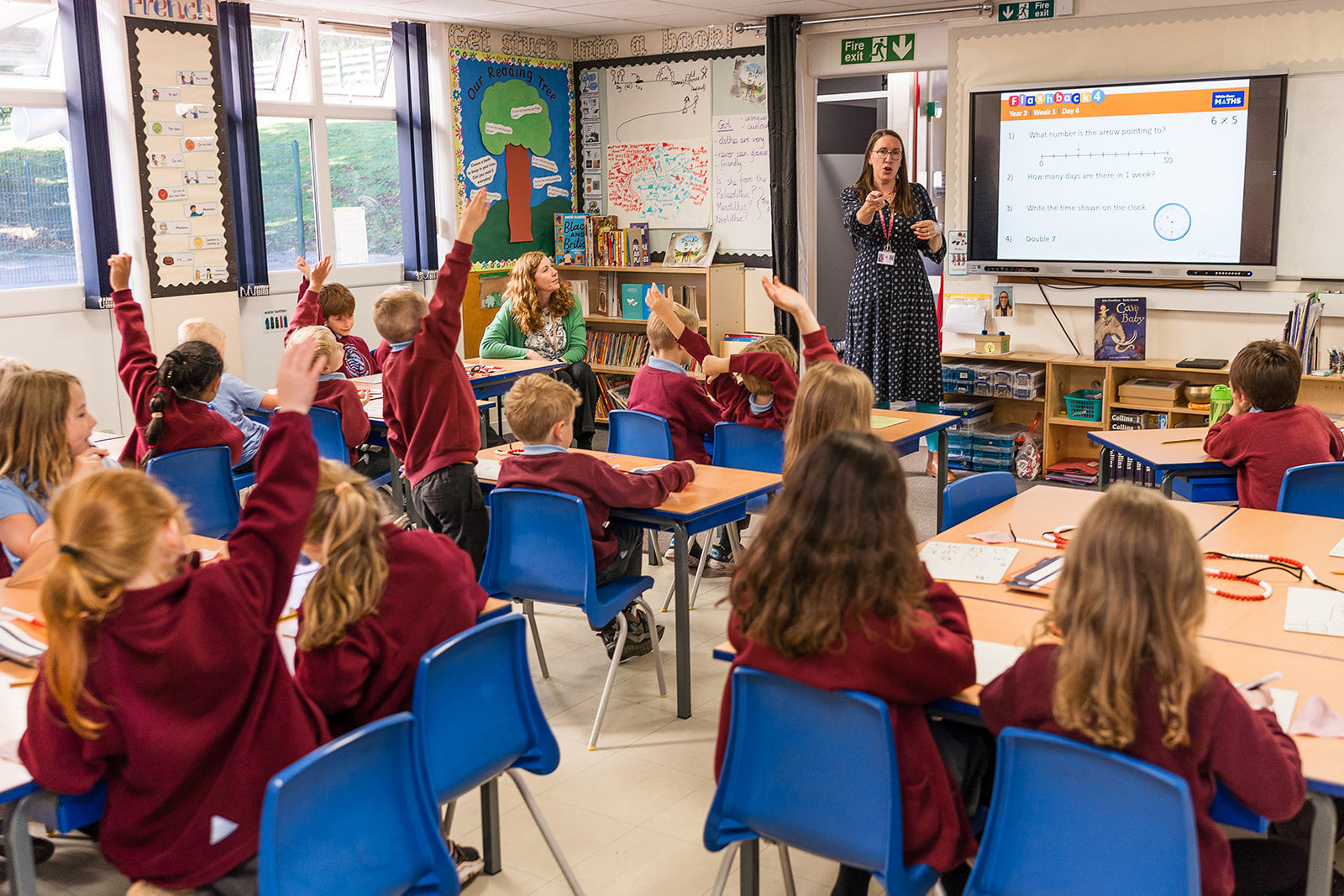
• KS2 sessions begin with a ‘flashback’ session where pupils practise previous learning and revisit previously taught concepts before progressing onto the main focus of the lesson, which is the new maths learning, delivered through a sequenced small steps curriculum
Numbots and Times Table Rockstars can be accessed by all pupils, both at home and in school, to further develop, support and consolidate learning
Classroom working walls, and the use of purchased teaching resources, support teachers in delivering the maths curriculum and pupils in developing their mathematical skills, and ensure consistency in the language of the learning and teaching of maths.
By the time children reach the end of Year Six, they will be secure in their fluency, problem solving and reasoning abilities and will be working in line with age related national expectations. Furthermore, they will be able to use their mathematical thinking skills such as reasoning, problem-solving, making connections, to justify their methods to have a positive impact on their own maths work through working in an efficient manner.
Impact
Through our maths curriculum, pupils become fluent, confident, and resilient learners who can solve problems efficiently and accurately. They develop the ability to articulate their mathematical thinking, apply skills across a range of contexts, and make strong progress from their starting points. By building rapid recall of key number facts and fostering a lifelong enjoyment of mathematics, we equip children with the knowledge, strategies, and attitudes needed for success in school and beyond.
Monitoring & Assessing Progress in maths
Mathematical concepts or skills are mastered when a child can show it in multiple ways, using the mathematical language to explain their ideas, and can independently apply the concept to new problems in unfamiliar situations. At Westbrook, learning always starts with the children’s prior knowledge and any misconceptions they may have. Class teachers decide upon the most appropriate age-related way of obtaining the children’s prior knowledge. Misconceptions that arise throughout the unit are identified and addressed appropriately by the teacher. Teachers celebrate successes in all children and recognise this through verbal praise, use of Dojos and sharing of work.
The monitoring of maths is completed through work scrutiny and pupil interviews using targeted questioning linked to areas for development. Supported by teaching lesson observations and learning walks the outcomes of this then guide future work.
Formative assessments take place throughout the year; gaps in children’s learning are identified and interventions are put in place to help fill them. In addition, summative assessments take place on a termly basis. These are used to measure pupils’ attainment against national curriculum objectives, identify gaps in understanding, and inform future planning. These assessments support teacher observations and provide a snapshot of progress and help ensure children are on track to meet age-related expectations.

Maths Curriculum Intent, Implementation and Impact Statement