




Westbrook Lane Primary School
nurtures confident children with caring hearts and curious minds
Writing Curriculum
Intention
A well planned and effectively implemented curriculum begins with a sound and secure knowledge of the National Curriculum purpose and aims for the subject.
National Curriculum Purpose for English
English has a pre-eminent place in education and in society. A high-quality education in English will teach pupils to speak and write fluently so that they can communicate their ideas and emotions to others and through their reading and listening, others can communicate with them. Through reading in particular, pupils have a chance to develop culturally, emotionally, intellectually, socially and spiritually. Literature, especially, plays a key role in such development. Reading also enables pupils both to acquire knowledge and to build on what they already know. All the skills of language are essential to participating fully as a member of society; pupils, therefore, who do not learn to speak, read and write fluently and confidently are effectively disenfranchised.
National Curriculum Aims
Ensure that all children can:
· read easily, fluently and with good understanding
· develop the habit of reading widely and often, for both pleasure and information
· acquire a wide vocabulary, an understanding of grammar and knowledge of linguistic conventions for reading, writing and spoken language
· appreciate our rich and varied literary heritage
· write clearly, accurately and coherently, adapting their language and style in and for a range of contexts, purposes and audiences
· use discussion in order to learn; they should be able to elaborate and explain clearly their understanding and ideas
· are competent in the arts of speaking and listening, making formal presentations, demonstrating to others and participating in debate
At Westbrook, our curriculum follows the statutory guidance and is designed to link with other subjects taught across the curriculum as well as provide the full National Curriculum entitlement to children.
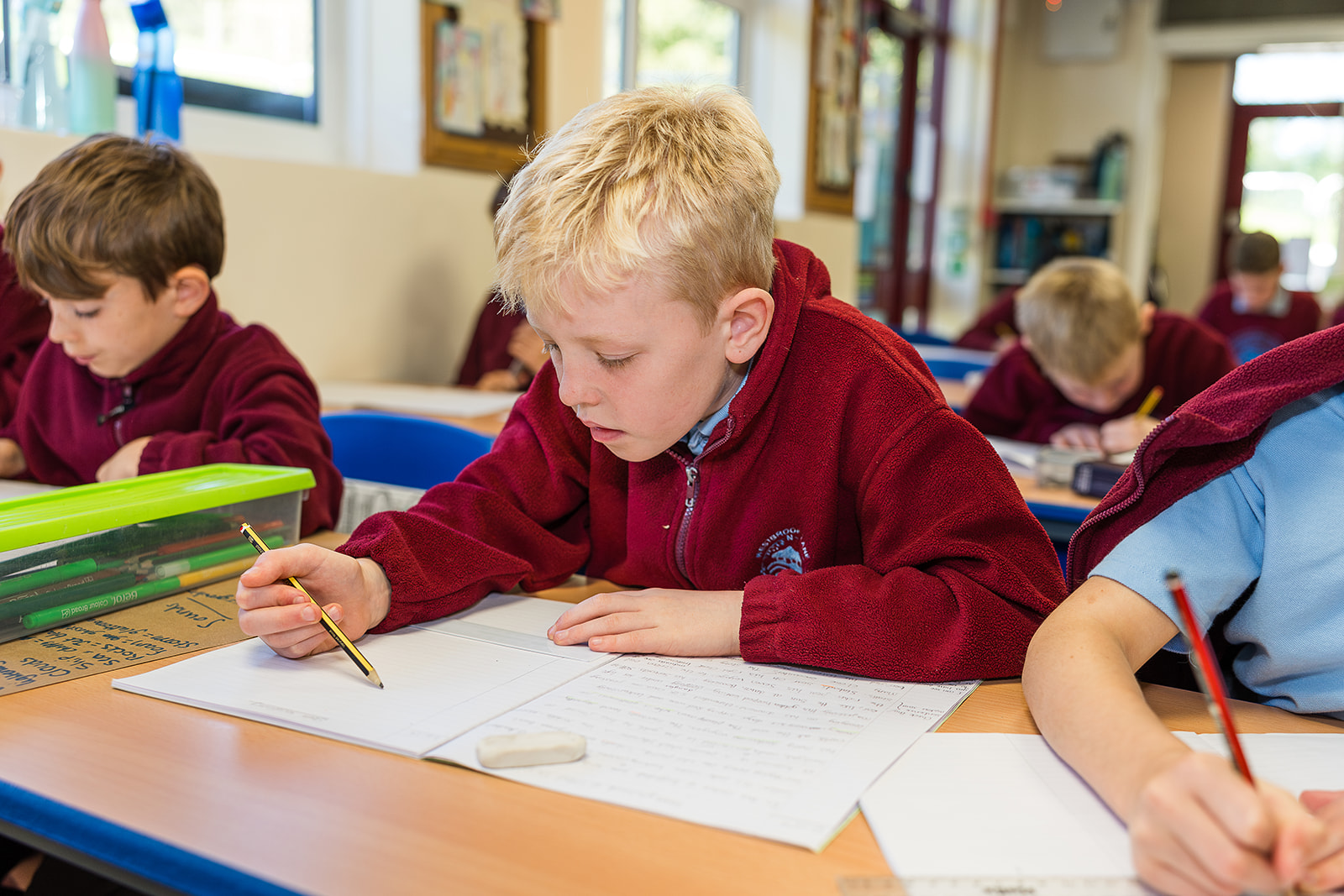
We hold high expectations for all pupils, including those with SEND and EAL, and are committed to supporting each child to achieve their full potential as a writer. A text-rich environment is provided to model and reinforce the writing process, ensuring pupils are continually exposed to high-quality language and examples of effective writing. Through engaging and well-structured learning experiences, pupils develop competence in all aspects of writing, including spelling, handwriting, grammar, punctuation, and composition.
Our aim is to nurture accurate, confident, and ambitious writers who can apply their skills across the wider curriculum and in a variety of contexts. We ensure that pupils are equipped to write for a range of purposes and audiences, reflecting the diversity of subjects and real-world situations they encounter. Above all, we seek to foster a culture in which pupils take pride in their written work and maintain consistently high standards throughout all areas of learning.
A feature of our curriculum design is the understanding of The Simple View of Writing. It highlights the key groups of skills that work together as children write:
· transcription skills - which enable the writer to move oral language into written language (handwriting, phonics, spelling)
· text generation - which involves thinking of ideas and using oral language skills to put those thoughts into words and sentences (vocabulary, grammar)
· executive functions - such as self-regulation, planning, problem-solving, and monitoring their writing
Transcription skills and text generation are part of the components of writing. We intend to explicitly teach the components of writing across our curriculum to build the required skills and understanding in preparation for developing composite knowledge. Composite knowledge refers to the complete task or written outcome. Effective composition involves forming, articulating and communicating ideas, and then organising them coherently for a reader. This requires clarity, awareness of the audience, purpose and context, and an increasingly wide knowledge of vocabulary and grammar.
“A component is any form of knowledge identified as necessary for understanding or doing something more complex – a composite. For example, writing a story is a composite task that requires secure knowledge of components such as letter formation, spelling and sentence structure. Pupils are more likely to be successful in learning composites if the components are broken down and sequenced over time, with sufficient practice to reach automaticity,” (Telling the story: the English education subject report, 2024).
|
Components of writing |
Examples of Composite tasks |
|
· Handwriting · Phonics and spellings · Vocabulary · Grammar (e.g. terminology and sentence structure) · Punctuation · Oracy · Audience and Purpose
|
· Letter · Narrative · Newspaper report · Instructions · Non-chronological report |
The curriculum for writing has :
Disciplinary Knowledge
Disciplinary knowledge in the primary writing curriculum refers to understanding how writing works as a discipline — that is, knowing how writers think, make choices, and create meaning — rather than just learning the skills or facts of writing.
In simpler terms, it’s the “writer’s mindset” and understanding of the craft of writing, not just the mechanics. It enables learners to effectively complete composite tasks.
Disciplinary knowledge includes:
· Knowing that writers make deliberate choices for purpose, audience, and effect.
· Understanding that writing is a process involving planning, drafting, revising, and editing.
· Recognising how language and structure shape meaning.
· Appreciating that good writing varies across genres and contexts.
· Developing a critical awareness of how writing communicates ideas and influences readers.
Theoretical Knowledge (Substantive)
· Theoretical knowledge refers to the components of writing. These are the foundational skills for writing as outlined above.
These have each been sequenced so that pupils are explicitly taught aspects in small steps, allowing pupils to gradually build their understanding and mastery of knowledge.
Implementation
Quality first curriculum implementation in writing supports children in becoming secure, and fluent in the identified agreed core knowledge and skills in writing. At Westbrook, the journey to becoming passionate writers begins in the Early Years. Our youngest children are exposed to writing in all areas of provision and specific objectives are within the EYFS area of learning known as Communication and Language, Literacy and Physical Development. These will be led by the children’s interest and the ‘here and how’ gained from the observation, assessment and planning cycle. An example of how we inspire a love for writing in EYFS includes providing opportunities to be exposed to writing and to write in many different contexts such as exploring traditional tales.
By the time children reach the end of Year Six they will be secure in their writing abilities and will be working in line with age related national expectations.
We follow the Westbrook Writing Journey when planning and teaching our writing units. This allows for opportunities to teach component skills whilst working towards a composite task. Teachers will model this process and explicitly teach each step of the journey, giving children plenty of opportunity to practise and apply the skills with growing independence. Children will be able to talk about the writing journey and relate this to their own learning. Our English curriculum is centred around high-quality text choices that we use as a stimulus for writing. These texts show diversity in leading roles, cultures and settings, are appropriately challenging and demonstrate a rich vocabulary. A key part of all of our writing units is ensuring children have a secure understanding of audience and purpose. Children, in all year groups, must know what they are writing, why they are writing and who they are writing for. The sequence for this is shown below.

Higher attainers in writing are challenged to ensure they become fluent with the core key concepts through additional questioning and prompts (and tasks where appropriate) which helps extend their verbal reasoning skills as well as supporting them to engage in creating, evaluating, and analysing, delving deeper into the subject content. In writing, these children will exercise an assured and conscious control over levels of formality, particularly through manipulating grammar and vocabulary to achieve this and write effectively for a range of purposes and audiences with greater independence.
Impact
Monitoring & Assessing Progress in writing.
Assessing children’s progress is vital in order to establish their acquisition of knowledge and skills and building confidence and fluency in all subjects. At Westbrook, learning always starts with the children’s prior knowledge and any misconceptions they may have. Class teachers decide upon the most appropriate age-related way of obtaining the children’s prior knowledge. Misconceptions that arise throughout the unit are identified and addressed appropriately by the teacher. Teachers celebrate successes in all children and regularly recognise this through verbal praise, use of Dojos and sharing of work. The publishing stage in our writing journey provides the opportunity for children share and celebrate their work with others in our school and our community. Children will talk positively about their writing and take pride in their work.
We use the Westbrook writing criteria to support teachers in knowing what is expected of a writer in their class. These checklists can be used to moderate children’s writing but also to aid planning to ensure that all objectives are being explicitly taught. Teachers can use these checklists to track progress and to support data submissions at the end of Autumn, Spring and Summer term where children will be given a judgement of their writing. For children working below their year group, the previous year group checklists can be used for assessment purposes. For children working pre-key stage, teachers should refer to the pre-key stage standards.
At the end of each academic year, children will be assessed as:


